

Global

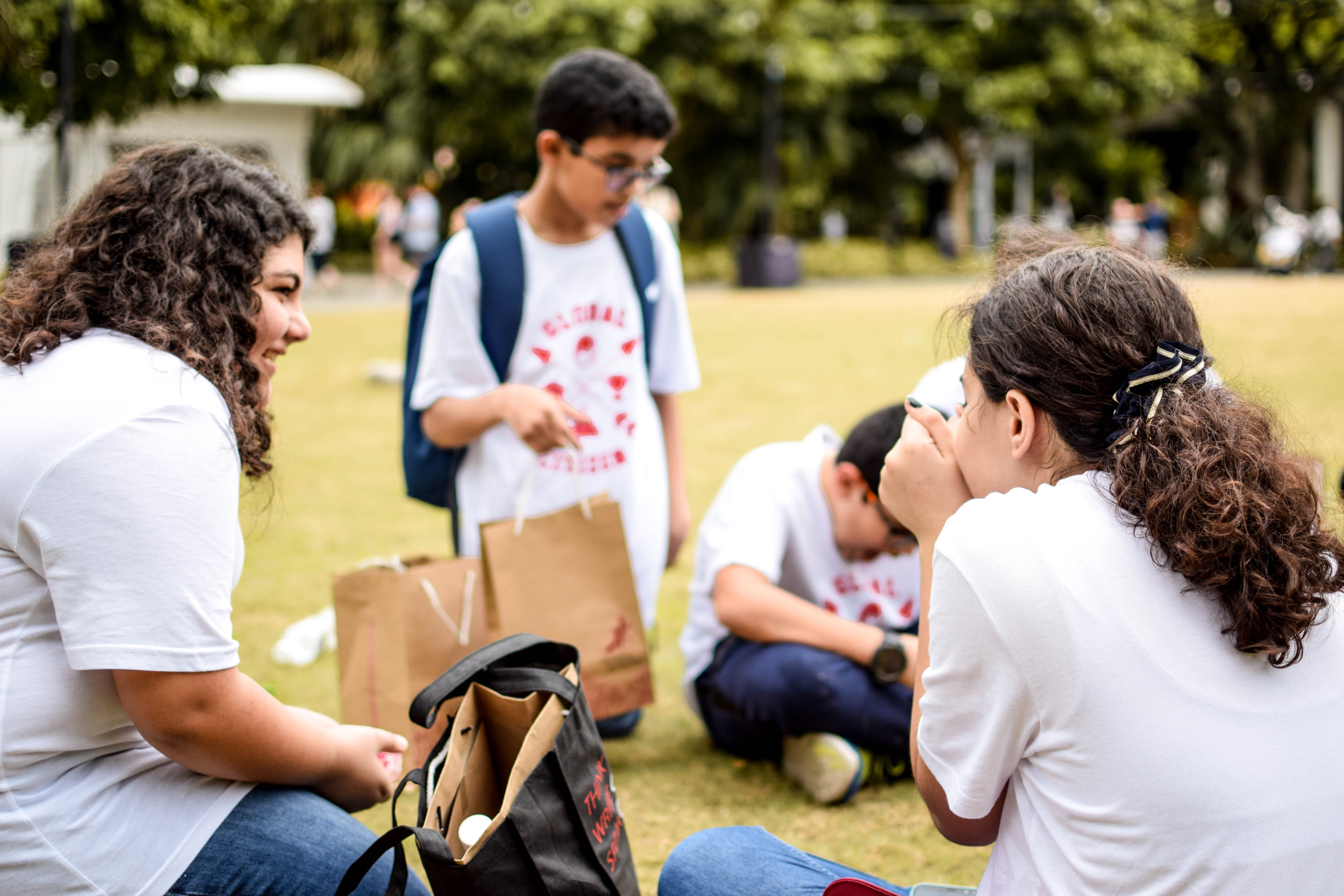
Without learning and skills enrichment, the future looks scary for both employers and employees. The ongoing skills gap must be bridged, allowing youths to develop 21st century skills that are essential to their future. However, not every child has the access, aptitude or knowhow to fully tap into the potential education can provide. Economic, social, cultural and technological factors come into play, affecting these groups of underprivileged youths in terms of access to quality education and skills training.
As industries evolve, many young people lack core skills like critical thinking, problem-solving, and adaptability—skills identified in SDG target 4.4 as essential for employability.
Quality education access is hindered by socio-economic and geographic barriers, aligning with SDG Targets 4.4 and 4.5 on equitable vocational and skills training, and Target 10.2 on inclusive empowerment for all.
Technology is reshaping the job market, making digital and STEM skills critical for future success. SDG target 4.4 prioritizes job-relevant skills, but educational systems often struggle to integrate tech-focused training.
Young people need skills to tackle urgent issues like climate change and inequality—key elements of SDG target 4.7, which emphasizes Education for Sustainable Development.
Many youth lack access to consistent, high-quality social-emotional learning (SEL), which fosters resilience, empathy, and social responsibility—key to achieving SDG Target 4.7.
At TGC, we hope that every student has an equal opportunity to experience learning that will develop their 21st century skills and competencies, preparing them for their future and be agents of change. The aim is to ultimately reach out to students who lack accessibility to co-curricular education and help them realize the importance of it.
Create and curate quality skills development programs
Promote a community for Education for Sustainable Development with education institutions and like-minded partners
Facilitate cross-cultural and international connectivity to promote understanding and dialogue
Partner with education stakeholders to create opportunities for underprivileged and underrepresented youths
Develop education pathways for youths to transform themselves to be the leaders and global citizens of tomorrow