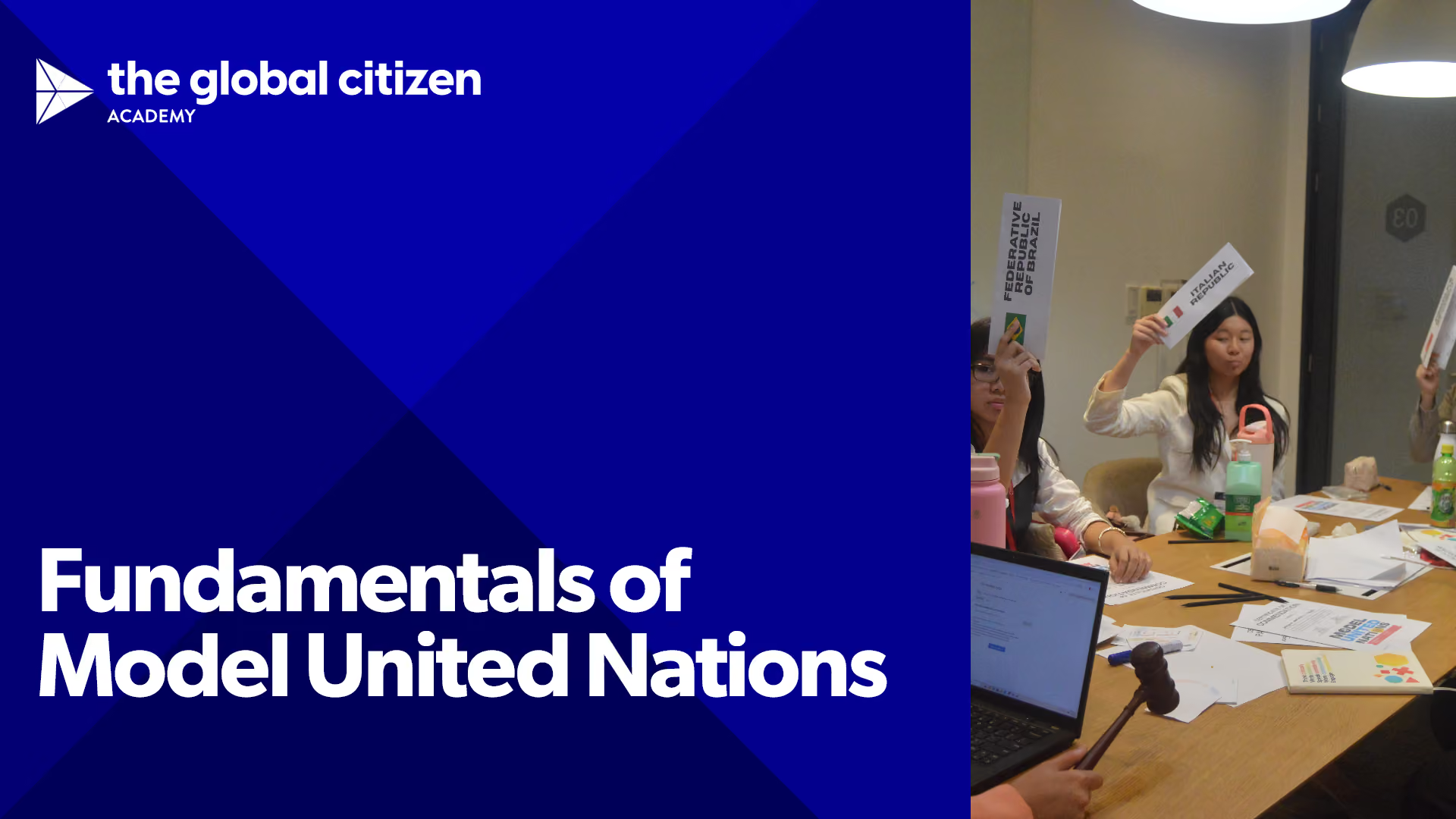






What is Debate?
Debate is essentially interaction between speakers or teams of speakers as they argue over an issue. In a formal debate, two sides take opposing positions: one supporting the resolution (affirmative) and one opposing it (negative). Participants work in teams to present arguments, counter-arguments, and supporting evidence to persuade adjudicators or audiences. Beyond the competition, debate helps students strengthen research, problem-solving and communication skills, think critically under pressure, as well as build confidence. These skills translate into real-life benefits, preparing them to become persuasive speakers, problem-solvers, and future leaders in school, career, and society.
Rules of Debate
In a debate tournament (WSDC format), students take on different roles: they can start as debaters and advance to roles like adjudicators. A typical debate session will look like this:
- First Proposition Speaker: Opens the debate, defines the motion, presents the team’s case, and outlines arguments.
- First Opposition Speaker: Responds directly to the first proposition, may redefine the motion, and presents the team’s counter-arguments.
- Second Proposition Speaker: Rebutts the first opposition’s points & introduce new arguments.
- Second Opposition Speaker: Rebutts the second proposition and presents further arguments.
- Third Proposition Speaker: Reinforces the team’s case, rebuts remaining opposition points, and summarizes key arguments.
- Third Opposition Speaker: Rebutts the third proposition, reinforces the opposition’s case, and concludes persuasively.
- Reply Speaker - Proposition & Opposition: Summarizes key arguments, highlights important exchanges, and reinforces why their side wins.
About the Course
The Debate Fundamentals Program is designed to build students’ confidence in public speaking while introducing them to the core components of debate. Students are introduced to the basics of debate, focusing on building confidence in speaking and understanding how to form simple arguments. Through guided activities and low-stakes exercises, students learn how to express ideas clearly, structure basic arguments, and respond to others respectfully. By the end of the term, students will be able to participate in simple speaking and debate activities with confidence.
Course Structure
Introduction to Debate: Introduces participants to the purpose of debate, key terminology, common debate formats, and the roles of speakers.
Crafting your case: Explore how strong debate cases are structured, including motion interpretation, and division of arguments.
Diving into argumentation: Learn the PEEL structure (Point, Evidence, Explanation, Link) and how arguments are built to persuade
Building strong substantives: Examine how impactful arguments are developed through clear mechanisms, logical reasoning, and real-world impacts.
Using evidence effectively: Learn how to locate reliable sources, interpret statistics, and integrate evidence